


6 Records to Plan Your Fleet Maintenance Budget

Planning next year’s fleet maintenance budget starts with records, not guesses. In Q4, pull repair history, repeat-failure notes, downtime logs, preventive-maintenance completion, tire and fuel records, and aging-unit information. Together, these records show where uptime is being lost and which medium-duty trucks need attention first.

Fleet maintenance budget records beside medium-duty trucks

Why should fleet managers start with records?

A budget is more useful when it reflects what your fleet actually experienced. A single repair invoice can explain one event, but a full-year record can reveal patterns: the same component failing repeatedly, a truck returning to service too slowly, or scheduled maintenance being delayed.

For Tampa Bay fleets, this review is especially practical because routes, traffic, heat, rain, and stop-and-go work can place different demands on vehicles. Start with one consistent reporting period, then compare trucks by unit number, mileage, engine hours, service date, and repair category.

Your goal is not to create a complicated report. Your goal is to answer three straightforward questions:

  • Which repairs interrupted operations?
  • Which maintenance tasks were missed or delayed?
  • Which units are becoming harder to keep productive?

Use the results to shape next year’s maintenance priorities and service schedule. If your team needs help organizing a maintenance program, review the company’s fleet services and preventative maintenance options.

1. Repair history: What work did each truck need?

Pull work orders, invoices, technician notes, and mobile-service records for every unit. Include both planned and unscheduled work. Sort the information by vehicle, date, mileage, engine hours, system, and repair type.

Look for:

  • Major repairs by unit and system
  • Parts or components replaced more than once
  • Repairs that returned within a short period
  • Work performed on-site versus in the shop
  • Open recommendations that were never completed

Repair history gives you the basic maintenance picture. It also helps separate normal wear from issues that deserve deeper diagnosis. For example, repeated cooling-system work may point to a broader problem rather than several unrelated repairs. Connect the record to relevant services such as engine service , radiator repair , or diagnostics .

2. Repeat failures: Which problems keep coming back?

Repeated failures deserve their own review because they can consume technician time and create avoidable downtime. Search work orders for recurring descriptions, including similar symptoms recorded under different wording.

Group failures by:

  • Vehicle and component
  • Failure symptom
  • Root cause, if documented
  • Repair performed
  • Whether the repair solved the issue

Ask the technician to review any pattern that is unclear. An ASE-certified technician can often distinguish a failed part from an underlying condition that caused the part to fail. That distinction matters when deciding whether next year’s plan should include deeper testing, a component replacement, or a change in inspection frequency. Learn more about the value of ASE-certified service .

3. Downtime logs: Where did uptime disappear?

Downtime records should show more than the date a truck entered a shop. Capture when the problem was reported, when the vehicle arrived, when diagnosis began, when parts were available, and when the truck returned to work.

If your current log is informal, create a simple record for each event. Include the unit, route or assignment affected, reason for downtime, repair status, and return-to-service date. Also note whether a substitute vehicle was required.

This helps identify whether lost uptime is tied mainly to:

  • Recurring mechanical problems
  • Delayed diagnosis
  • Parts availability
  • Scheduling or approval delays
  • Work that expanded after inspection

Downtime logs make operational impact visible. They can also support better coordination between a fleet manager, technicians, drivers, and service providers. When a truck must be removed from service, clear records help the team decide whether to repair, inspect further, or schedule additional work.

Technician inspecting a medium-duty truck in a shop bay

4. PM completion: Are scheduled tasks actually happening?

Pull your preventive-maintenance schedule and compare planned tasks with completed work. Review oil changes, filter service, brake inspections, fluid checks, belts, hoses, cooling systems, batteries, and other tasks relevant to each vehicle.

For every unit, identify:

  • Tasks completed on schedule
  • Tasks completed late
  • Tasks skipped or deferred
  • Recommendations still open
  • Mileage or engine-hour gaps in the record

A completion review is not about assigning blame. It shows whether the current process fits the fleet’s routes and workload. If maintenance is repeatedly pushed back, the issue may be scheduling, vehicle availability, communication, or an interval that needs review.

Use these findings to build a practical service calendar. Pair scheduled work with inspections that can identify developing issues before they become roadside interruptions. Your oil change service and brake service records can be useful starting points.

5. Tire and fuel records: What do operating patterns show?

Tire records should include replacements, repairs, rotations, inspections, irregular wear, and unit assignment. Fuel records should be reviewed by vehicle and operating pattern, with attention to unusual changes rather than unsupported assumptions.

Check for:

  • Repeated tire damage or uneven wear
  • Frequent tire replacements on one unit
  • Fuel entries that do not match normal use
  • Changes after a repair or route change
  • Missing or inconsistent vehicle records

These records can point toward inspection needs involving alignment, suspension, brakes, driveline condition, or engine performance. They should not be used alone to diagnose a problem, but they can help prioritize where a technician should look. Consider linking the review to suspension service , battery and electric service , or fuel service .

6. Aging units: Which trucks need a decision?

Create an aging-unit list using vehicle year, mileage, engine hours, repair frequency, downtime, parts concerns, and overall condition. The point is not simply to identify the oldest trucks. It is to identify units whose maintenance demands are becoming less predictable.

For each aging vehicle, record:

  • Recent major repairs
  • Repeat failures
  • Downtime pattern
  • Deferred maintenance
  • Condition of major systems
  • Expected role in next year’s operation

Then place each unit into a working category: maintain, inspect further, plan major repair, or evaluate for replacement. This creates a clearer conversation than age alone. A well-maintained older truck may remain dependable, while a newer unit with repeated failures may need immediate attention.

For major powertrain concerns, review available engine and transmission services before finalizing the plan.

How should Tampa Bay fleet managers use the six records?

Start with a simple table containing one row per vehicle and columns for repair history, repeat failures, downtime, PM completion, tires, fuel, and age. Add notes for open recommendations and the next action required.

Review the table with your maintenance provider and technicians. Ask which patterns are confirmed, which need inspection, and which can be addressed through scheduling. Keep operational priorities visible: trucks that support essential routes may need a different service plan from reserve units.

For fleets in Tampa, St. Petersburg, Clearwater, Brandon, Plant City, and nearby communities, local service coordination can make the review easier. Professional Fleet Maintenance supports medium-duty truck repair and fleet maintenance throughout Central and South Florida, including Tampa, Florida .

Q4 fleet maintenance budget checklist

Before completing next year’s plan, confirm that you have:

  • Repair history for every unit
  • A list of repeat failures and unresolved recommendations
  • Downtime events with return-to-service dates
  • PM tasks completed, delayed, or skipped
  • Tire and fuel records organized by vehicle
  • An aging-unit review with a clear next action

Final takeaway

A reliable fleet maintenance budget begins with six records: repair history, repeat failures, downtime, PM completion, tire and fuel activity, and aging units. Together, they show which trucks consume attention, which problems threaten uptime, and where preventive work may be falling behind. Pull the records in Q4, organize them by vehicle, and review the patterns with an experienced technician. Then turn the findings into a service calendar and unit-by-unit action list. For Tampa Bay fleets, the next step is to compare your records with a practical maintenance plan before scheduling next year’s work.

Cab-over truck maintenance for landscaping crews in Florida
By Samantha Boylls • October 19, 2026
Practical cab-over truck maintenance for landscaping and service crews in Orlando and Kissimmee, covering heat, idling, short trips, towing, and driver checks.

Work truck after storm flooding on a wet road
By Samantha Boylls • October 12, 2026
Learn what to do with a work truck after storm flooding. An ASE Certified technician explains what professionals inspect in Miami-Dade and Broward.

Fleet maintenance check for box trucks before holiday delivery peak
By Samantha Boylls • October 5, 2026
Prepare South Florida delivery trucks for holiday demand with five practical fleet maintenance checks.

Close up of a commercial truck dashboard with illuminated warning lights.
September 28, 2026
Learn what common commercial truck dashboard warning lamps mean from an ASE-certified tech. Know which symbols require an immediate stop to prevent engine damage.

Professional fleet maintenance service counter and billing office
September 21, 2026
Learn how a CB Charge fleet account simplifies consolidated billing for truck repairs at Professional Fleet Maintenance locations across South and Central Florida.

White delivery truck in Tampa traffic representing diesel aftertreatment challenges.
September 14, 2026
Discover why stop-and-go Tampa traffic is hard on diesel aftertreatment systems and how last-mile delivery fleets can prevent soot buildup and downtime.
Technician inspecting medium duty truck for storm readiness
September 7, 2026
An ASE-Certified guide to pre-storm fleet readiness in South Florida. Learn how to prep medium-duty trucks for Broward and Palm Beach storm seasons to ensure post-storm reliability.

Medium duty truck tires on a Florida construction site
August 24, 2026
Expert advice on managing Florida work truck tires during summer. Avoid blowouts with pressure checks and professional maintenance in Central Florida.

ASE Certified technician installing a JASPER remanufactured engine in a fleet truck.
August 17, 2026
Learn why Professional Fleet Maintenance chooses JASPER remanufactured engines and transmissions to minimize downtime for Fort Lauderdale and Tampa fleets.
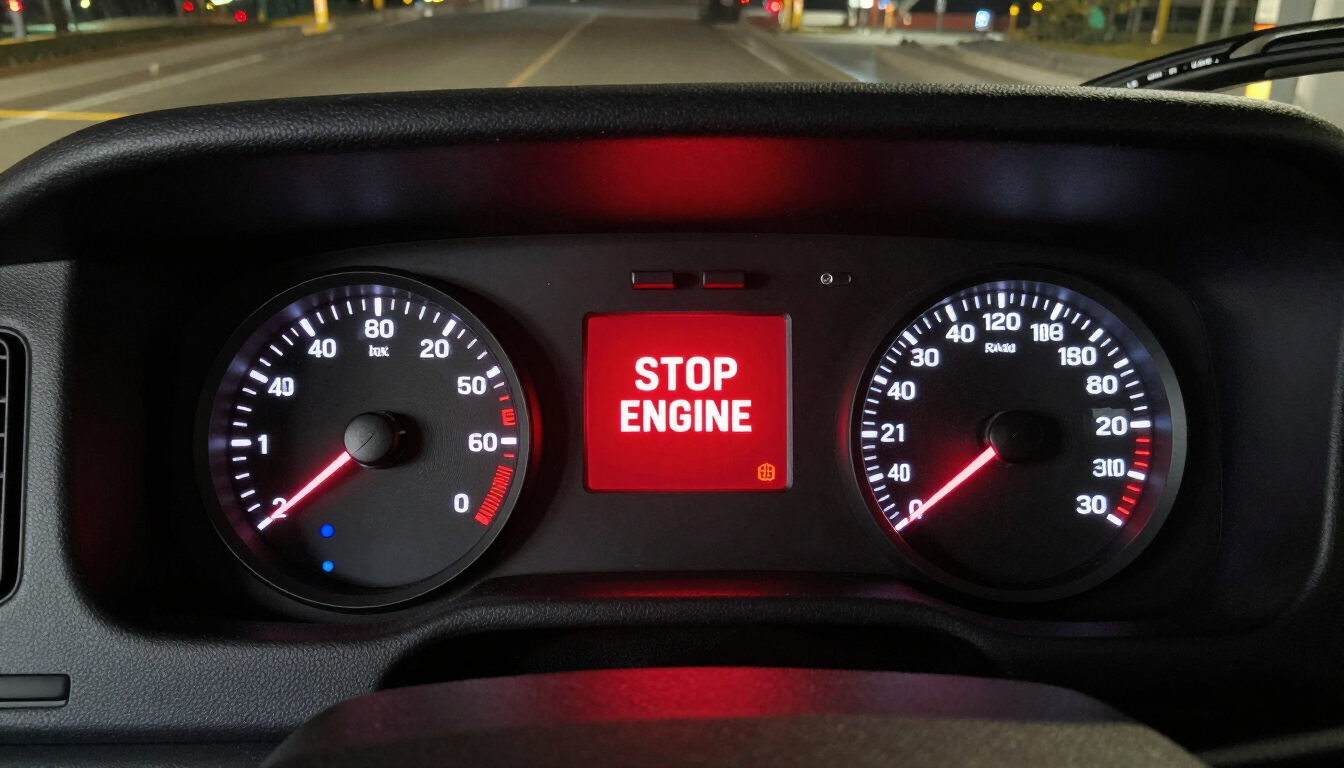
Commercial truck dashboard with glowing red warning lights illuminated.
August 7, 2026
Learn which truck dash warnings require an immediate stop. Our ASE Certified technician explains red lamps, derates, and fault codes to save your engine and ensure safety.

Show More