
5 Questions About Remanufactured Engines in Tampa Bay

Remanufactured engines are fully disassembled, inspected, machined, and rebuilt to defined standards using replacement parts where needed. Rebuilt engines typically receive only necessary repairs, while used engines are removed from another vehicle with unknown history. For a Tampa Bay fleet owner, the right choice depends on condition, documentation, application, and installation quality.

What does “remanufactured engine” mean?

A remanufactured engine is not simply a used engine cleaned up and resold. It is returned to a controlled process in which the engine is disassembled and its major components are inspected against specifications. Parts may be machined, restored, or replaced before the engine is assembled and tested.

The goal is consistency. A reputable remanufacturing process evaluates the engine as a complete system rather than replacing only the component that first failed. That matters in a medium-duty truck, where cooling, fuel, lubrication, electrical, and emissions-related systems all affect engine performance.

A remanufactured engine may include work such as:

  • Complete disassembly and cleaning
  • Measurement of critical components against specifications
  • Machining or replacement of worn parts
  • Assembly using appropriate replacement components
  • Testing and quality-control checks before shipment

The exact process varies by supplier and engine family, so ask what is included rather than relying on the label alone.

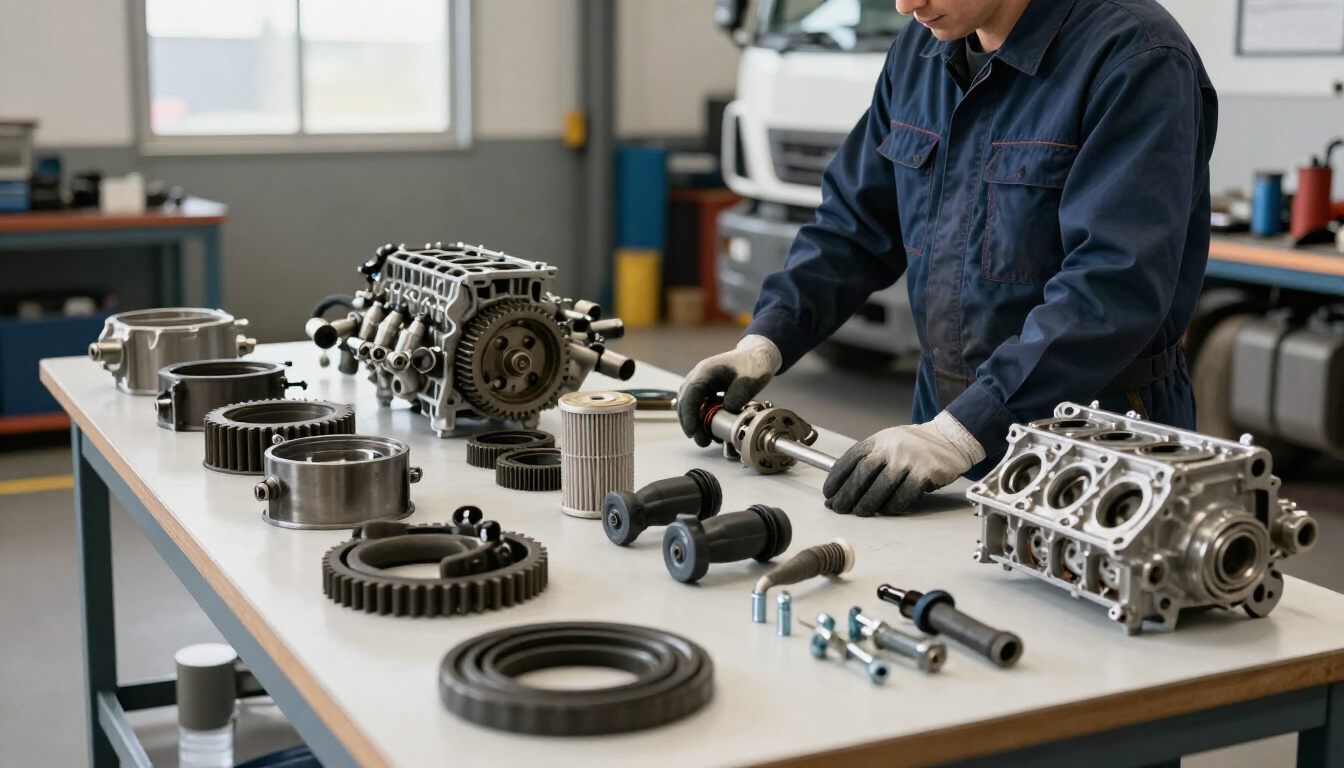
Engine components being inspected during professional remanufacturing

Remanufactured vs. rebuilt vs. used engines: what is the difference?

These terms are often used interchangeably, but they can describe very different levels of inspection and preparation.

Remanufactured engines

A remanufactured engine follows a defined rebuilding process. Components are evaluated, and parts that do not meet requirements are repaired or replaced. The process is intended to produce a consistent finished unit for a particular application.

Rebuilt engines

A rebuilt engine is generally repaired after disassembly, but the scope can vary significantly. A shop may replace failed or worn components while reusing other parts that still appear serviceable. Ask how deeply the engine was inspected and which parts were replaced.

Used engines

A used engine is usually removed from another vehicle and sold based largely on its previous service history, mileage, testing, and apparent condition. A used engine may be a practical option in some situations, but its past maintenance and operating conditions may be difficult to verify.

The important question is not which word sounds best. It is whether the engine’s process, parts, testing, documentation, and intended application are clear.

Why do we install Jasper remanufactured engines and transmissions?

Professional Fleet Maintenance installs Jasper remanufactured engines and transmissions because a fleet repair needs more than a part that physically fits. It needs a replacement selected for the truck’s application and supported by a defined remanufacturing process.

Jasper’s product line gives our technicians an established source to evaluate when a remanufactured powertrain is appropriate. We still perform our own diagnosis and installation checks. A supplier’s process does not replace accurate troubleshooting at the vehicle level.

Before recommending an engine, our team considers:

  • The truck’s make, model, year, and engine configuration
  • The failure symptoms and diagnostic findings
  • Cooling-system, fuel-system, electrical, and transmission conditions
  • How the truck is used, including duty cycle and load
  • Whether related problems could damage the replacement engine

You can learn more about our Jasper engines and transmissions , or review our engine service options before scheduling an inspection.

What should Tampa Bay fleet owners ask before choosing an engine?

A major engine decision deserves direct answers. Ask these questions before approving work:

  1. What caused the original engine to fail? A replacement may not last if overheating, poor lubrication, fuel contamination, restricted airflow, or another underlying issue remains unresolved.
  2. What does the supplier’s remanufacturing process include? Ask about inspection, machining, replacement parts, assembly standards, and testing.
  3. Is this engine correct for my exact truck and application? Confirm the engine family, configuration, sensors, controls, accessories, and intended duty cycle.
  4. Which related components will be inspected? Cooling, fuel, intake, exhaust, electrical, and transmission systems can affect installation success.
  5. What will the installation process include? Ask how fluids, filters, connections, programming, startup checks, and post-installation diagnostics will be handled.

These questions help you compare options based on evidence instead of assumptions. A professional technician should be able to explain the recommendation in plain language.

Installation is part of the engine decision

Even a well-prepared replacement engine can have problems if the vehicle-side cause of failure is missed or installation is rushed. The engine is only one part of a working powertrain.

A careful installation may include checks of:

  • Radiator, hoses, thermostat, water pump, and cooling airflow
  • Oil and fuel systems, including contamination concerns
  • Intake plumbing, charge-air components, and filtration
  • Wiring, sensors, controls, and battery condition
  • Transmission, mounts, driveline, and exhaust connections

After installation, technicians should verify fluid levels, inspect for leaks, confirm operating temperatures, check warning lights, and perform appropriate diagnostic tests. The exact steps depend on the truck and engine system.

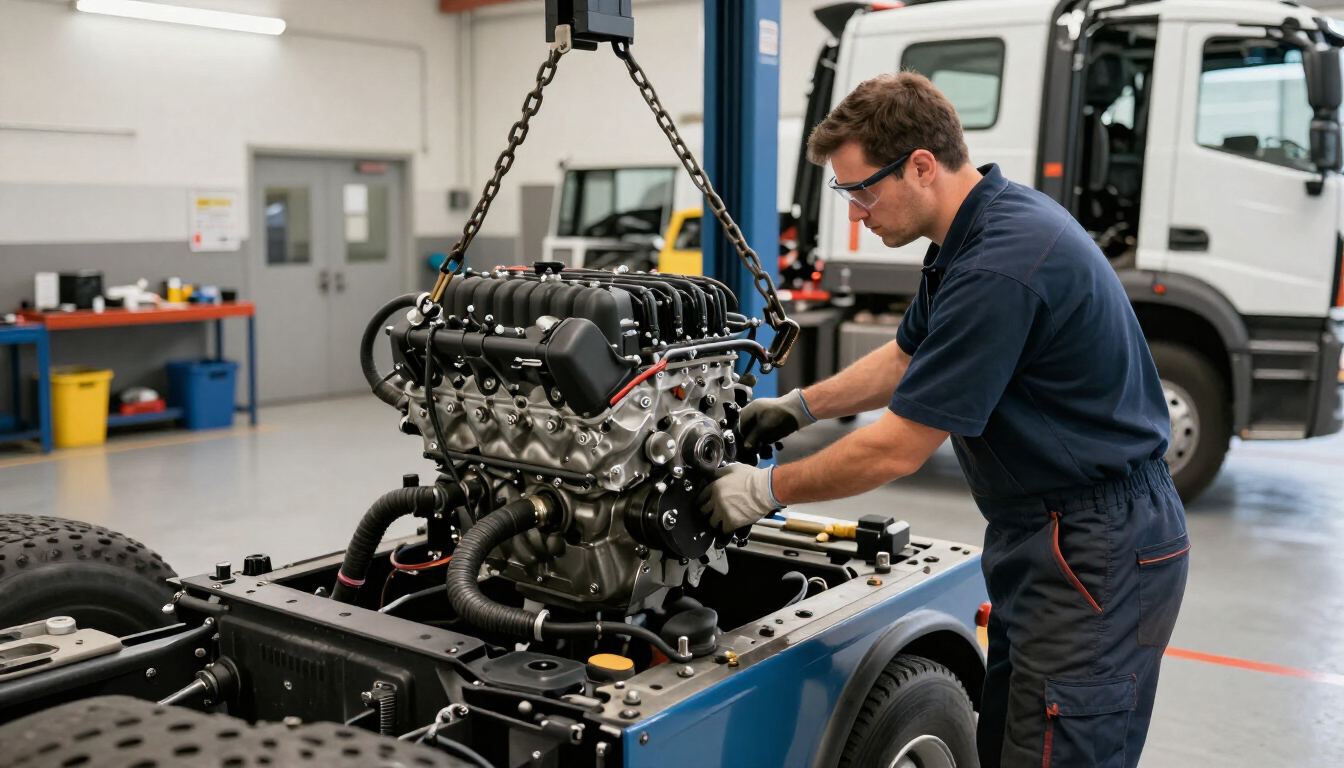
Technician installing an engine in a medium-duty truck

For fleets in the area, Professional Fleet Maintenance provides medium-duty truck service in Tampa Bay and can also help with diagnostics before a replacement decision is made.

When should you choose a remanufactured engine?

A remanufactured engine is worth evaluating when the current engine has a major internal failure, when its condition is not a good candidate for limited repair, or when a fleet needs a more documented replacement than an unknown-history used unit.

It may be less appropriate if the actual problem has not been identified, if major vehicle systems are also compromised, or if the replacement is being selected only by availability. Diagnosis comes first. Replacing an engine without understanding the failure can repeat the same problem.

For owner-operators, uptime matters, but so does confidence in the repair. Bring maintenance records, note recent symptoms, and explain how the truck is used. Details such as heavy loads, stop-and-go driving, long idle periods, hills, and hot Florida operating conditions can help technicians make a better recommendation.

A straightforward next step

Remanufactured engines offer a documented, process-driven alternative to both limited repairs and unknown-history used engines. Rebuilt engines may vary in scope, while used engines depend heavily on history and testing. Tampa Bay fleet owners should compare the process, application fit, diagnosis, related-system inspection, and installation plan—not just the label. If your truck has a major failure, gather its service history and schedule a professional diagnosis. Professional Fleet Maintenance serves Tampa Bay and Central Florida with fleet services , preventative maintenance , and truck repair support.

CB Charge fleet financing billing manager reviewing repair invoices
November 23, 2026
Learn how CB Charge fleet financing can organize shop repair billing with one monthly invoice and online account access for Broward County fleet owners.

Farm hauling trucks ready for winter harvest in Florida
November 9, 2026
Prepare farm hauling trucks for winter harvest around Plant City, Lakeland, and Bartow with five practical uptime-focused checks from an ASE Certified truck technician.

Box truck in Miami-Dade traffic where DPF regen failure can develop
November 2, 2026
Learn why DPF regen failure happens on stop-and-go delivery routes in Miami-Dade, warning signs to watch, why derates require a stop, and what technicians check.

Fleet maintenance budget planning records beside medium-duty trucks
By Samantha Boylls • October 26, 2026
Planning next year's fleet maintenance budget? Pull these six records first to spot repeat failures, downtime, PM gaps, and aging medium-duty trucks.

Cab-over truck maintenance for landscaping crews in Florida
By Samantha Boylls • October 19, 2026
Practical cab-over truck maintenance for landscaping and service crews in Orlando and Kissimmee, covering heat, idling, short trips, towing, and driver checks.

Work truck after storm flooding on a wet road
By Samantha Boylls • October 12, 2026
Learn what to do with a work truck after storm flooding. An ASE Certified technician explains what professionals inspect in Miami-Dade and Broward.

Fleet maintenance check for box trucks before holiday delivery peak
By Samantha Boylls • October 5, 2026
Prepare South Florida delivery trucks for holiday demand with five practical fleet maintenance checks.

Close up of a commercial truck dashboard with illuminated warning lights.
September 28, 2026
Learn what common commercial truck dashboard warning lamps mean from an ASE-certified tech. Know which symbols require an immediate stop to prevent engine damage.

Professional fleet maintenance service counter and billing office
September 21, 2026
Learn how a CB Charge fleet account simplifies consolidated billing for truck repairs at Professional Fleet Maintenance locations across South and Central Florida.

White delivery truck in Tampa traffic representing diesel aftertreatment challenges.
September 14, 2026
Discover why stop-and-go Tampa traffic is hard on diesel aftertreatment systems and how last-mile delivery fleets can prevent soot buildup and downtime.

Show More