
Cooling System Checks For Summer

Cooling system checks involve a comprehensive inspection of the radiator, coolant quality, charge air cooler, and the structural integrity of belts and hoses. These evaluations ensure your medium-duty truck can effectively dissipate engine heat, preventing catastrophic failure during the extreme temperatures and high humidity of a Florida summer.

Why is the Florida summer so hard on medium-duty trucks?

Operating a medium-duty truck in Fort Lauderdale or anywhere in Broward County isn't like driving in the Midwest. Our environment presents a unique trifecta of challenges: intense ambient heat, suffocating humidity, and corrosive salt air. When the thermometer hits 95 degrees with a heat index of 110, your truck’s cooling system is working at its absolute limit just to maintain a safe operating temperature.

For owner-operators, this isn't just a matter of comfort; it is a matter of business survival. A cooling system failure on I-95 during rush hour doesn't just mean a towing bill. It means missed deliveries, unhappy customers, and potentially an engine replacement that could cost tens of thousands of dollars. At Professional Fleet Maintenance, our ASE Certified technicians have spent over 20 years seeing exactly how the Florida sun degrades commercial vehicles.

The humidity plays a significant role because moist air is less efficient at absorbing heat from your radiator than dry air. This puts a higher "heat load" on the entire system. Furthermore, the salt air common in coastal Florida can lead to accelerated corrosion of the delicate aluminum fins on your radiator and charge air cooler. This is why preventative maintenance is the only real defense against the summer surge in breakdowns.

Understanding the heat load on your radiator

The radiator is the heart of your truck’s thermal management. Its job is to take the scorching heat generated by your diesel engine and transfer it into the atmosphere. However, several factors can compromise this process. The term "heat load" refers to the total amount of thermal energy the system must dissipate. In the summer, that load increases significantly because the temperature difference between the coolant and the outside air is much smaller.

One of the most common issues we see at our Fort Lauderdale shop is external blockage. Medium-duty trucks often operate in dusty environments or navigate city streets where road debris, plastic bags, and even insects can clog the cooling fins. When these fins are blocked, airflow is restricted, and the radiator cannot shed heat. Internal scaling is another silent killer. Over time, minerals in the coolant can plate the inside of the radiator tubes, acting as an insulator that keeps heat trapped inside the fluid rather than letting it escape. This is why professional radiator repair and regular flushing are essential components of a healthy maintenance routine.

Technician inspecting truck radiator

How does coolant condition affect engine life?

Coolant is not just "colored water." It is a sophisticated chemical cocktail designed to raise the boiling point of the fluid, lower the freezing point (less relevant in Florida, but still important for chemical balance), and provide vital anti-corrosion protection. For medium-duty diesel engines, the coolant also contains supplemental coolant additives (SCAs) that prevent a phenomenon called cavitation.

Cavitation occurs when tiny bubbles form on the outside of the cylinder liners. When these bubbles collapse, they do so with enough force to eventually pit and hole the metal, allowing coolant to enter the combustion chamber. During a diesel service visit, our technicians check the pH balance and the freeze point of your coolant.

  • Color changes: If your coolant looks muddy or rusty, it has likely lost its protective properties.
  • pH imbalance: Coolant that becomes too acidic will start eating away at seals and gaskets.
  • Contamination: Oil in the coolant can indicate a failing oil cooler or head gasket, requiring immediate diagnostics .

The critical role of the charge air cooler

Many owner-operators focus solely on the radiator, but the Charge Air Cooler (CAC) is just as vital for medium-duty trucks. The CAC sits in front of or next to the radiator and is responsible for cooling the compressed air coming from the turbocharger before it enters the engine. Cold air is denser and contains more oxygen, which is necessary for efficient combustion and lower Exhaust Gas Temperatures (EGTs).

If the CAC is leaking or clogged with debris, the engine is forced to breathe hot air. This leads to a massive spike in internal engine temperatures, reduced fuel economy, and a noticeable loss of power. In the Florida heat, a failing CAC can push an engine over the edge into an overheating condition very quickly. Because the CAC is often "sandwiched" with the radiator and A/C condenser, it requires a professional eye to ensure there aren't hidden debris piles or hairline cracks in the aluminum tanks that are leaking boost pressure.

Mobile fleet service van parked next to a line of commercial trucks in Florida.
August 3, 2026
Learn how to safely get your commercial fleet back on the road after a hurricane with professional post-storm inspection tips from ASE Certified technicians.
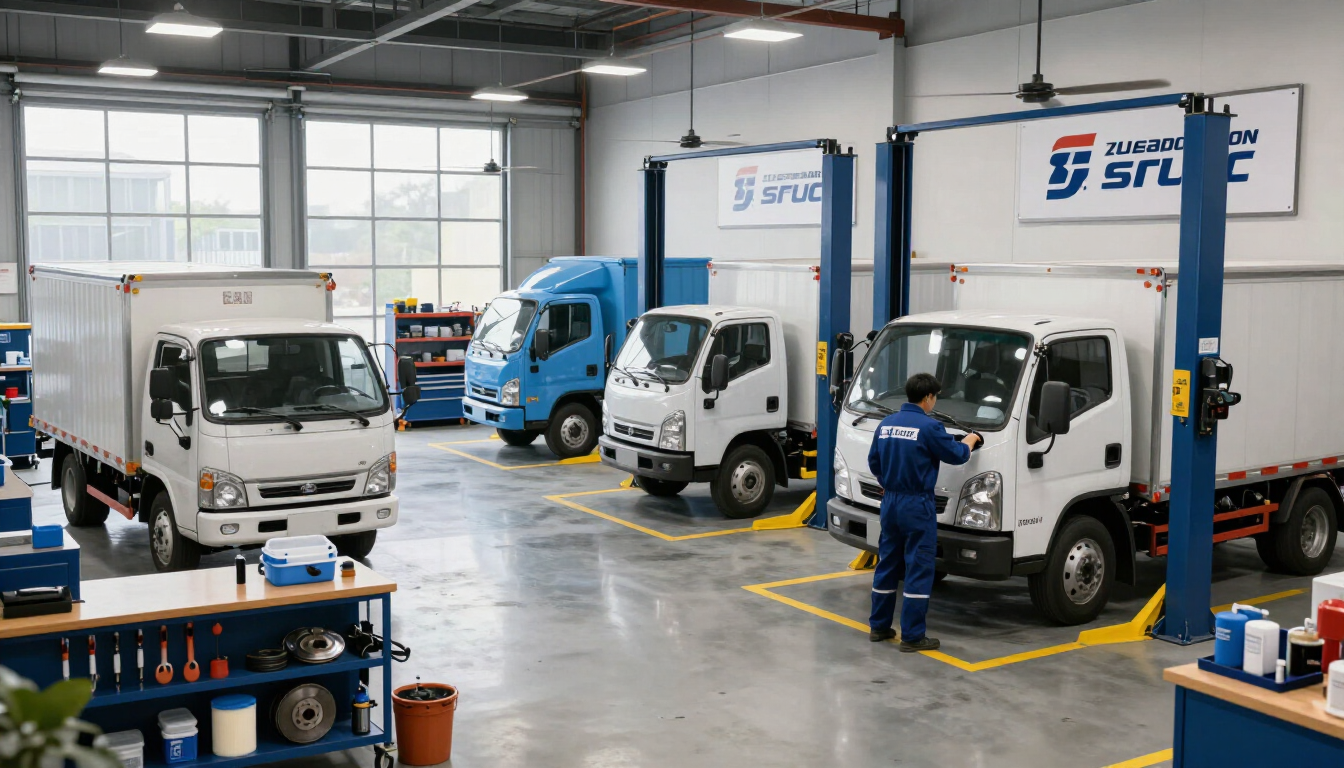
Medium duty trucks inside a professional fleet service shop bay.
July 27, 2026
Simplify your truck repair billing with a cbCharge fleet account. Get one monthly invoice, 30-day terms, and a secure online portal at our Florida shops.

ASE Certified technician testing commercial truck batteries in a Florida shop bay.
July 20, 2026
Learn why Florida heat is the #1 killer of commercial truck batteries. Discover warning signs and professional testing methods from an ASE-certified technician to avoid breakdowns.
Professional truck driver performing walkaround inspection on a medium duty truck.
July 13, 2026
Master your daily routine with our commercial truck walkaround guide. ASE Certified tips on tires, brakes, and leaks for Florida drivers from Professional Fleet Maintenance.

Technician filling a medium duty truck with DEF fluid
July 6, 2026
Expert guide on Diesel Exhaust Fluid (DEF) for Florida fleet managers. Learn how to prevent heat degradation and contamination in your medium-duty trucks from an ASE Certified technician.
Medium duty box truck in heavy Florida traffic illustrating DPF challenges.
June 22, 2026
Learn why short routes in Tampa and Miami cause DPF issues. ASE certified tech advice on diesel regeneration, soot buildup, and professional aftertreatment diagnostics for Florida fleets.
By VIV Builder June 15, 2026
Use this commercial vehicle maintenance checklist for Florida fleets, covering fluids, tires, brakes, batteries, cooling, and more to reduce downtime and keep vehicles road-ready.
ASE Technician inspecting medium duty truck
June 8, 2026
Expert ASE-certified tips for commercial fleet hurricane season readiness in South Florida. Covering maintenance, staging, and post-storm recovery.
By VIV Builder May 25, 2026
Compare on-site fleet maintenance vs. shop repairs to find the best option for your business, balancing convenience, diagnostics, downtime, and fleet size.
By VIV Builder May 11, 2026
Discover the true cost of fleet downtime and how regular preventative maintenance protects your bottom line by reducing breakdowns, controlling costs, and extending vehicle life.
Show More